


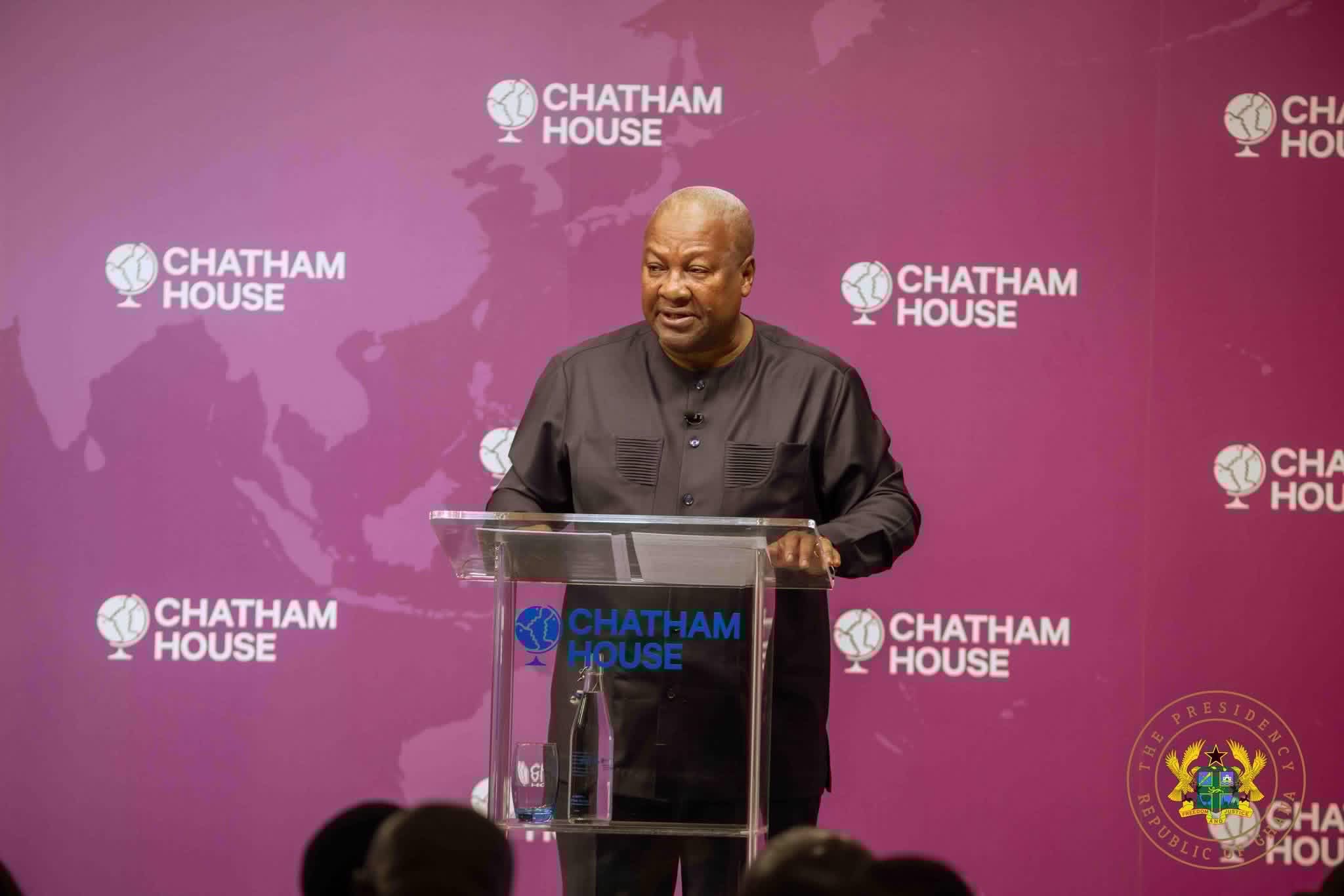
President John Dramani Mahama has officially launched the Ghana National Research Fund, describing it as a major step toward addressing long-standing financing challenges in the country’s research sector and accelerating industrial growth.
Speaking at the launch on Tuesday, June 16, the President said the initiative forms a key part of the government’s broader resetting agenda aimed at transforming Ghana’s economy through innovation and industrialisation.
He explained that the Fund is designed to provide sustainable and predictable financing for research and development, emphasizing that investment in local knowledge systems is critical to national progress.
“Today, Ghana affirms that research can no longer be treated as a peripheral activity. It must become one of the engines that drive our economic growth, our social progress, and our national competitiveness,” he stated.
President Mahama traced the vision behind the initiative to Ghana’s founding leader, Kwame Nkrumah, noting that he recognized early the importance of science, technology, and innovation in achieving economic transformation.
He said Nkrumah understood that true industrialisation required more than the export of raw materials, stressing the need for Ghana to develop its own technologies and homegrown solutions to national challenges.
The President also acknowledged the contributions of former President John Evans Atta Mills, whom he credited for strongly advocating science, technology, innovation, and research as a central pillar of development.
According to him, although the idea of a national research fund had existed for years, the absence of a sustainable financing mechanism had stalled its implementation. He noted that this gap has now been addressed through the passage of the enabling legislation, Act 1056 of 2020, and commended former President Nana Akufo-Addo for facilitating its approval.
President Mahama further observed that major global advancements in areas such as medicine, telecommunications, artificial intelligence, biotechnology, renewable energy, and manufacturing have been driven by sustained investment in research.
He cautioned that Ghana cannot achieve meaningful industrial transformation while under-investing in knowledge creation, pointing out that local researchers have long operated under severe financial constraints despite producing globally competitive work.
The Ghana National Research Fund, he said, is expected to address these structural challenges by supporting priority areas of national development, including the government’s 24-hour economy initiative and the Accelerated Export Development Programme.
The initiative is widely seen as a significant step toward strengthening Ghana’s innovation ecosystem and positioning the country for long-term economic growth.