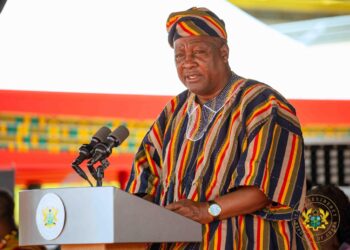


The report, “Evaluating the Macroeconomic Effects of the Ghana Gold Board (GoldBod)”, was presented to GoldBod by Prof. Festus Ebo Turkson and Peter Junior Dotse of the University of Ghana’s Department of Economics, and Prof. Agyapomaa Gyeke-Dako of the University of Ghana Business School.

According to the study, recorded artisanal and small-scale mining (ASM) gold exports rose sharply from 63.6 metric tons in 2024 to 103.0 metric tons in 2025. The report estimates that the additional 39.4 tons largely represent gold that was previously smuggled out of the country but has now been formalised.
Valued conservatively at US$96.5 million per ton, the newly formalised gold generated approximately US$3.8 billion in additional foreign exchange inflows into Ghana’s formal financial system.
The authors directly compared these gains with the US$214 million trading loss reported by the IMF for the Bank of Ghana and concluded that the benefits of GoldBod exceed the costs by a ratio of 18 to 1. The report notes that formalising just 2.2 tons of gold would have been sufficient to offset the entire reported loss.
Beyond headline figures, the study argues that much of the BoG loss reflects accounting translation effects rather than actual cash losses. Gold purchases are made at near-retail exchange rates to deter smuggling, while foreign exchange inflows must be booked at the interbank rate, creating apparent losses on paper.
The report concludes that GoldBod should be viewed as a macroeconomic stabilisation tool, not a profit-seeking trading institution, citing its role in strengthening reserves, stabilising the cedi, and reducing Ghana’s reliance on external borrowing.
A new technical report has found that the Ghana Gold Board (GoldBod) has delivered macroeconomic benefits that far exceed the reported trading losses of the Bank of Ghana (BoG), primarily through the drastic reduction of gold smuggling and the mobilisation of non-debt foreign exchange inflows.
The report, “Evaluating the Macroeconomic Effects of the Ghana Gold Board (GoldBod)”, was presented to GoldBod by Prof. Festus Ebo Turkson and Peter Junior Dotse of the University of Ghana’s Department of Economics, and Prof. Agyapomaa Gyeke-Dako of the University of Ghana Business School.
According to the study, recorded artisanal and small-scale mining (ASM) gold exports rose sharply from 63.6 metric tons in 2024 to 103.0 metric tons in 2025. The report estimates that the additional 39.4 tons largely represent gold that was previously smuggled out of the country but has now been formalised.
Valued conservatively at US$96.5 million per ton, the newly formalised gold generated approximately US$3.8 billion in additional foreign exchange inflows into Ghana’s formal financial system.
The authors directly compared these gains with the US$214 million trading loss reported by the IMF for the Bank of Ghana and concluded that the benefits of GoldBod exceed the costs by a ratio of 18 to 1. The report notes that formalising just 2.2 tons of gold would have been sufficient to offset the entire reported loss.
Beyond headline figures, the study argues that much of the BoG loss reflects accounting translation effects rather than actual cash losses. Gold purchases are made at near-retail exchange rates to deter smuggling, while foreign exchange inflows must be booked at the interbank rate, creating apparent losses on paper.
The report concludes that GoldBod should be viewed as a macroeconomic stabilisation tool, not a profit-seeking trading institution, citing its role in strengthening reserves, stabilising the cedi, and reducing Ghana’s reliance on external borrowing.