

What was conceived as a solution to the chronic water shortages confronting residents of Teshie, Nungua and surrounding communities has now become a US$235 million financial liability for Ghana.
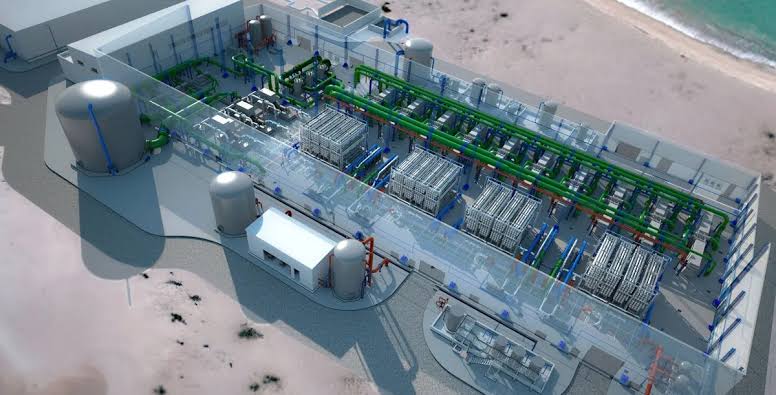
The Teshie-Nungua Desalination Plant, built at an estimated cost of about US$125 million, has produced one of the most expensive consequences of a failed public-private partnership: two final arbitration awards ordering Ghana Water Company Limited (GWCL) to pay US$235 million to Befesa Desalination Developments Ghana Limited (BDDG), the company behind the plant.
The awards were issued on September 17, 2026, following a long-running dispute over the termination of the Water Purchase Agreement (WPA). The Republic of Ghana is also liable under the sovereign guarantee attached to the project. Interest on the award has been running since April 1, 2026, and will continue until payment.
The case raises fundamental questions about how Ghana negotiated the deal, why the agreement was terminated, whether the financial risks were properly understood before the state guarantee was issued, and why attempts to renegotiate the arrangement failed.
Most importantly, it raises a question that cannot be avoided:
How did a project intended to provide water to hundreds of thousands of people turn into a US$235 million liability for the Ghanaian taxpayer?
FROM WATER CRISIS TO WATER PURCHASE AGREEMENT
The origins of the project go back more than a decade. Teshie and Nungua had suffered chronic water shortages for years when Befesa Ghana Limited submitted an unsolicited proposal to GWCL on April 29, 2010, for the construction of a 60,000-cubic-metre-per-day desalination plant.
GWCL subsequently approved the project, leading to the signing of the Water Purchase Agreement under a build-own-operate-transfer
The structure was straightforward in principle. A private company would finance, construct and operate the plant, while GWCL would purchase the water produced. After 25 years, ownership was expected to transfer to the state.
But buried within the arrangement was a critical financial obligation: GWCL was required to pay a fixed capacity charge for the plant, regardless of whether it was producing its full contracted volume of water.
That distinction would become central to the controversy. The Government of Ghana backed the agreement with a state guarantee.
Parliament approved the guarantee in 2012, together with a US$110 million Water Purchase Agreement and tax and duty exemptions estimated at about US$72.8 million over the life of the arrangement.
The exemptions covered duties on equipment as well as VAT, NHIL, corporate tax and withholding tax concessions.
In other words, the project was supported not only by a government guarantee but also by significant fiscal incentives.
Government
WARNING SIGNS WERE THERE
There were warning signs even before the project became operational. Parliamentary consideration of the agreement raised questions about the capacity of the Ghanaian project company and the involvement of its foreign sponsors. There were also concerns about the price of the water.
Befesa initially sought a bulk tariff of US$1.716 per cubic metre. The Public Utilities Regulatory Commission considered the proposed price uncompetitive and indicated a lower figure of about US$1.37 per cubic metre, subject to verification of actual costs.
That disagreement was an early indication of the financial tension embedded in the arrangement.
The fundamental question was simple:
Could GWCL afford the water it had committed itself to buying?
The subsequent history suggests that the answer became increasingly difficult.
THE COST OF PAYING FOR CAPACITY
The government’s own 2024 Annual Report on Public Private Partnership Projects provides a revealing picture of the financial structure.
In 2024, Befesa invoiced approximately US$16.93 million. Of this amount, about US$14.94 million represented capacity charges, while US$1.54 million represented variable water charges.
The plant produced an average of approximately 43,009 cubic metres of water per day against a contracted capacity of 60,000 cubic metres.
That represented only about 72% of the contracted capacity. Yet the capacity charge remained payable. This is one of the most important elements of the controversy. Ghana was not simply paying for every cubic metre of water it consumed. It was also paying for the availability of the plant.
And increasingly, the financial burden was being carried directly by the state. In 2024, GWCL reportedly paid only about US$800,000 of the US$16.92 million settled that year. The Ministry of Finance paid approximately US$16.12 million.
The government’s PPP report shows that state support to GWCL for the project amounted to approximately:
Government
– US$13.92 million in 2020;
– US$9.54 million in 2021;
– US$8.22 million in 2022;
– US$9.58 million in 2023; and
– US$16.12 million in 2024.
That amounts to approximately US$57.38 million in government support over five years. Yet, at the end of 2024, about US$9.77 million was still outstanding to Befesa. The financial strain was becoming increasingly difficult for the public utility to sustain.
THE PLANT ALSO HAD TECHNICAL PROBLEMS
The financial dispute was compounded by operational difficulties.
The government’s 2024 PPP report records frequent power outages affecting the plant. The plant’s electricity bill alone was approximately US$6.98 million in 2024. There were also disputes over the physical condition of the facility. In May 2024, Befesa reported the plant as inoperable following heavy rains.
A subsequent survey identified structural defects and inadequate bracing. Ghana Water reportedly attributed some of the problems to poor maintenance and neglect.
The dispute was therefore no longer simply about the price of water. It had become a three-way problem involving *money, performance and responsibility for the condition of the facility.
Who should pay?
Who should maintain the plant?
Who should bear the consequences when the plant does not produce the contracted quantity?
And ultimately, who bears the risk when the public utility cannot meet its financial obligations?
GOVERNMENT’S OWN REPORT CALLED FOR RENEGOTIATION
Perhaps the most revealing part of the government’s 2024 PPP report is what it recommended. Rather than terminating the arrangement, the report called for an expedited renegotiation of the Water Purchase Agreement.
It also recommended that government consider acquiring equity in the plant. That recommendation recognised that the existing structure was placing considerable financial pressure on GWCL.
Government
But the renegotiation did not produce a lasting solution. Instead, the relationship deteriorated further. The government eventually terminated the Water Purchase Agreement.
And that termination became the foundation of the arbitration proceedings.
GHANA TAKES THE DISPUTE TO ARBITRATION
The arbitration has now produced two final awards. According to the latest disclosure by Cox Infrastructure Group, which controls 95% of BDDG, the tribunal ordered payments totalling approximately US$235 million, net of taxes, in termination payments under the Water Purchase Agreement. Interest has been accruing from April 1, 2026. BDDG was also awarded part of its legal costs.
Ghana’s counterclaims, including a claim valued at approximately US$144.5 million, were substantially dismissed.
The awards are described as final and binding, subject to any challenge mechanisms available under the applicable arbitration laws.
The Republic of Ghana’s sovereign guarantee means the state is required to satisfy the obligations recognised under the award, subject to the terms of the guarantee and provisions preventing double recovery.
Ghana Sports Coverage
THE NUMBERS ARE STAGGERING
The scale of the award deserves closer scrutiny.
The government’s 2024 PPP report valued the project at approximately US$125 million. The arbitration award is therefore almost twice the reported construction value of the plant. That raises a critical public policy question:
How did a project valued at roughly US$125 million generate a termination liability of US$235 million?
The answer lies partly in the contractual structure. The award is not simply a refund of the project’s construction cost. It arises from termination payments and other obligations under the Water Purchase Agreement.
Cox has also stressed that the US$235 million represents gross sums recognised within the project’s financial structure and should not automatically be interpreted as US$235 million in net cash that will end up in Cox’s hands.
Government
The ultimate financial impact will depend on recovery, the project’s financing structure, third-party rights and accounting treatment. But for Ghana, the central issue remains unchanged:
The state has been found liable for a massive contractual obligation arising from a project that was supposed to address a basic public need—water.
AND THE PLANT IS NOW NOT SERVING THE PEOPLE
The financial liability would be easier to defend if the country were receiving the intended public benefit.
But the situation has gone in the opposite direction. The plant was shut down in October 2025 amid unresolved contractual and financial issues.
Communities including Teshie, Nungua, Baatsona, Spintex, Sakumono and parts of La have subsequently experienced severe water shortages and rationing.
Emergency measures, including water tankers and mechanised boreholes, have been deployed in some areas. Residents have complained about the additional cost of buying water privately.
The irony is difficult to ignore.
Ghana is now facing a potentially US$235 million liability over a desalination facility while communities the facility was intended to serve continue to experience water shortages.
Ghana Sports Coverage
WHAT HAPPENED TO THE GOVERNMENT’S NEGOTIATIONS?
There is another unanswered question.
In March 2026, the Minister for Works and Housing, Kenneth Gilbert Adjei, said government was close to resolving the matter.
He said the President had directed the Works and Housing Minister, the Finance Minister and the Attorney General to work towards a resolution. At the time, negotiations with the owners of the plant were said to be ongoing. But the arbitration awards have now been issued. The parties say negotiations toward an amicable settlement are still continuing.
That means Ghana is negotiating from a dramatically different position. BDDG now has final arbitration awards behind it, while Ghana has a sovereign guarantee attached to the underlying transaction.
WHO SIGNED OFF ON THE DEAL?
The emerging controversy points to a broader issue that goes beyond the desalination plant. It concerns Ghana’s management of long-term public-private partnerships. When government guarantees a private-sector project, the immediate expenditure may appear limited.
But a guarantee can create a significant contingent liability for the taxpayer. That is precisely why the Teshie-Nungua project deserves deeper scrutiny.
Parliament approved the guarantee.
Government agencies negotiated and implemented the agreement.
GWCL became the purchaser.
The Ministry of Finance subsequently provided substantial financial support.
And ultimately, the Republic became exposed to the arbitration award. The question for policymakers is therefore not simply who lost the arbitration. It is whether the institutional checks designed to protect the public purse worked as they were supposed to.
THE QUESTIONS GHANA MUST NOW ANSWER
The US$235 million award should trigger a comprehensive review of the transaction.
Among the questions requiring answers are:
1. Who negotiated the final Water Purchase Agreement and on what financial assumptions?
2. Why was the state guarantee considered necessary, and what risk assessment was conducted before Parliament approved it?
3. Why did the PURC raise concerns about the proposed water tariff?*
4. How much has Ghana paid to the project since its inception, including capacity charges, water charges, government support, tax exemptions and other associated costs?*
5. What was the total amount outstanding when the agreement was terminated?*
6. Why did the 2024 recommendation to renegotiate the agreement fail?*
7. What legal advice did the government receive before terminating the Water Purchase Agreement?
8. What caused the deterioration of the plant and who was contractually responsible for maintenance?
9. Why was the plant producing approximately 43,000 cubic metres a day against a contracted 60,000 cubic metres?
10. What exactly did Ghana’s counterclaim seek to recover, and why was the US$144.5 million claim substantially dismissed?
Ghana Sports Coverage
11. What are the precise terms of the sovereign guarantee approved by Parliament?
12. How much will the award ultimately cost Ghana after interest, legal costs and other obligations are included?
And perhaps the biggest question:
Who will be held accountable for the decisions that turned a project intended to solve a water crisis into a potential US$235 million burden on the state?*
A LESSON FOR GHANA’S PPP FUTURE
The Teshie-Nungua desalination project is no longer merely a dispute between GWCL and a private company. It is a case study in the risks Ghana assumes when entering long-term infrastructure contracts backed by sovereign guarantees.
A project can be privately financed and still expose the taxpayer to enormous liabilities. A project can provide a critical public service and still contain contractual terms that become financially unsustainable.
And a government can terminate a contract believing it is protecting the public purse, only to discover that the termination itself carries an even greater financial consequence.
Government
The US$235 million award does not tell the entire story.
The real story is the chain of decisions that led Ghana from a desperate search for water to a contractual commitment, from contractual difficulties to renegotiation attempts, from renegotiation to termination, and finally from termination to arbitration.
Ghana has now reached the bill.
The country must find out who wrote the contract, who approved it, who monitored it, why it failed—and why the taxpayer is being asked to pay for the failure.*