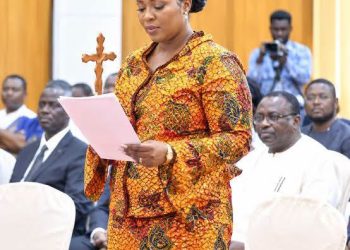


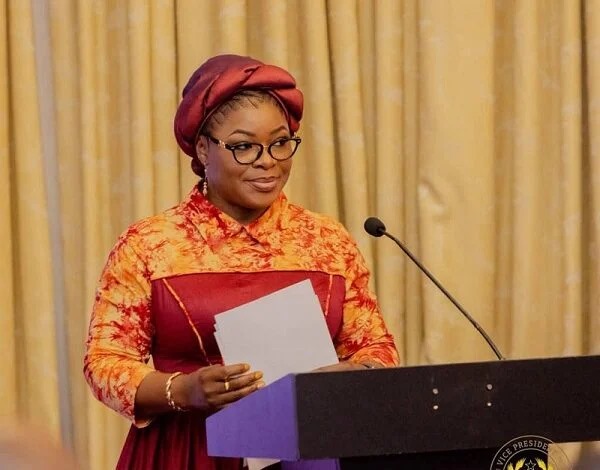
Deputy Presidential Spokesperson, Shamima Muslim, has called for a national conversation on the length of Ghana’s presidential term, arguing that the current four-year mandate is “wholly insufficient” for any government to deliver meaningful and lasting change.
Shamima Muslim said the country’s short political cycle fuels instability, encourages wasteful spending on frequent elections, and undermines long-term development planning.
“It is true that the four-year term is wholly insufficient if we are truly to change the path and trajectory of our development.
“Expensive elections that begin and start upon the end of another election don’t look like a practical way of managing your very scarce resources,” she said during an interview with TV3.
She noted that Ghana’s governance cycle leaves little time for effective work, as governments often spend the first year making appointments and the remaining years preparing for the next election.
“Year one is literally spent making appointments. By year two, even in year one, people are already talking about who leads which political party and who takes over from which political party,” she observed.
Ms. Muslim argued that the frequent elections drain resources that could otherwise support development priorities.
While acknowledging fears that extending term limits could enable abuse of power, Ms. Muslim suggested that creative constitutional adjustments could ensure continuity without undermining democratic accountability.
“Even if we do not want to extend the term limits, we must look at the possibility of allowing multiple terms for political party candidates. Once a political party elects someone to lead, that person should be able to go more than two terms if the people themselves see that we are on a certain transformative path that requires continuation.”
She emphasised that voter power would remain the ultimate safeguard.
“If we have a bad president, we are not stuck with them. You simply don’t vote for that person for a second term. But if a political party feels it has a long-term plan depending on its performance, the mentality towards development will be different from one that feels it has so limited a time.”
She further suggested that allowing political parties more flexibility in retaining successful leaders could enhance continuity and accountability.
“Allow the parties to decide who they want to lead them, even beyond a two-term limit. If a party decides to vote someone for three terms because that person’s vision is delivering results, let them. Then the nation goes into an election to decide if it still wants this party or not,” she said.
She added that such a system could offer governments a 12- to 15-year window to implement consistent development policies.
However, Shamima Muslim cautioned that longevity in office does not automatically ensure good governance.
“It is true that longevity doesn’t always guarantee good leadership. In that case, it is the people who will make the difference,” she said.
“Citizens must assert their right to choice and push for the necessary reforms when leadership goes off track.”
Concluding her remarks, Ms. Muslim urged policymakers to seize the opportunity presented by the ongoing constitutional review process to rethink Ghana’s governance framework for sustained national progress.
“Possibly, the Constitutional Review Committee will give us what we need to have this conversation because it would be detrimental to the country if we don’t.”